
Toboggan vs Beanie: Same Hat, Different Word
If you grew up in the American South, you call it a toboggan. Almost everywhere else in the United States, it is a beanie. Cross into Canada and it becomes a toque.
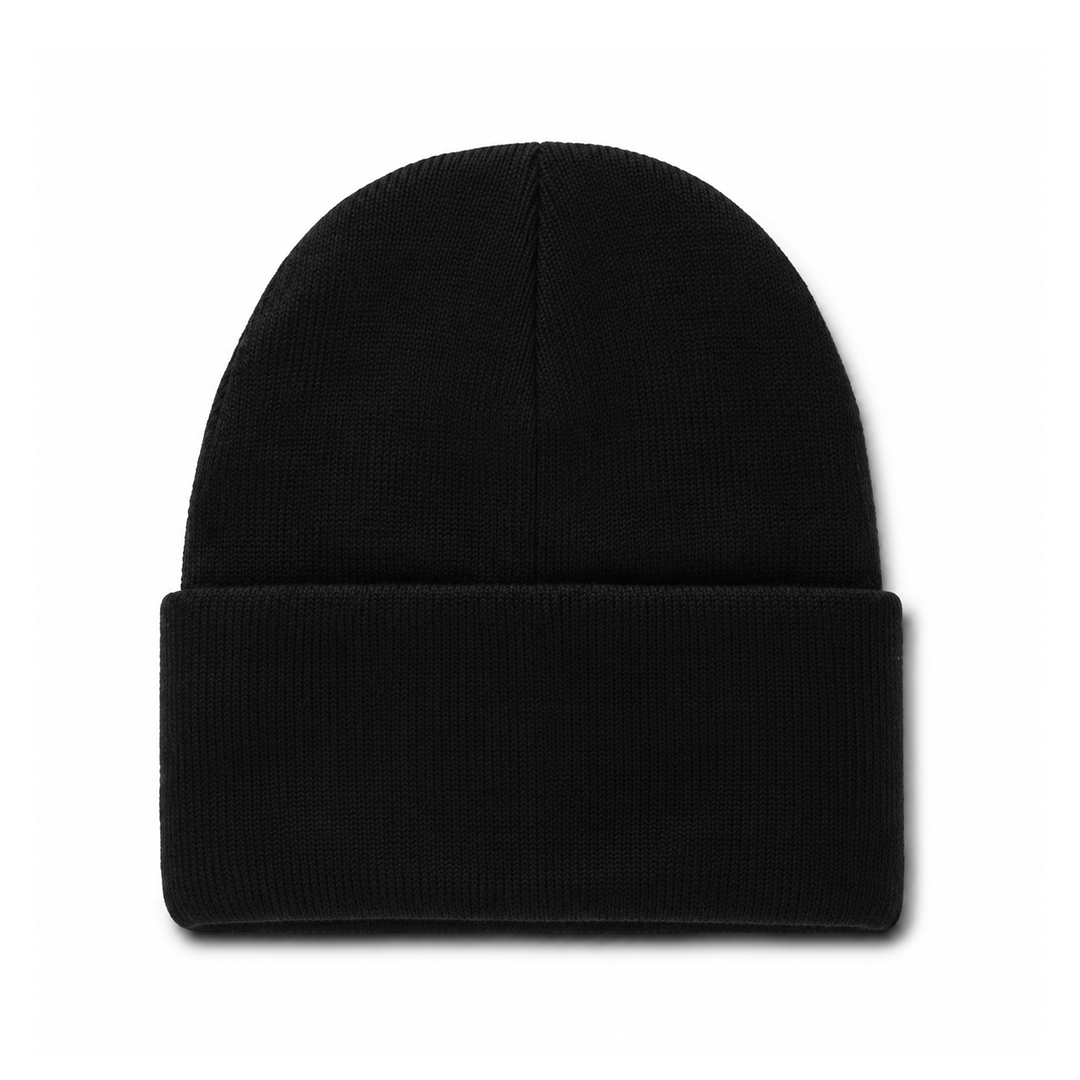
All three words describe the same object, and the toboggan vs beanie disagreement is entirely regional rather than technical. Speedy Pros Hats, a family-run hat shop in Tampa Bay, has been decorating them since 2009 under whichever name the customer uses.
- They are the same hat. Toboggan, beanie, and toque are regional names for one item.
- The real distinction is the cuff. Cuffed versus uncuffed changes how it wears and how well it holds a logo.
- Cuffed styles decorate best. The folded band gives the needle two stable layers of knit.
Toboggan vs Beanie: The Short Answer
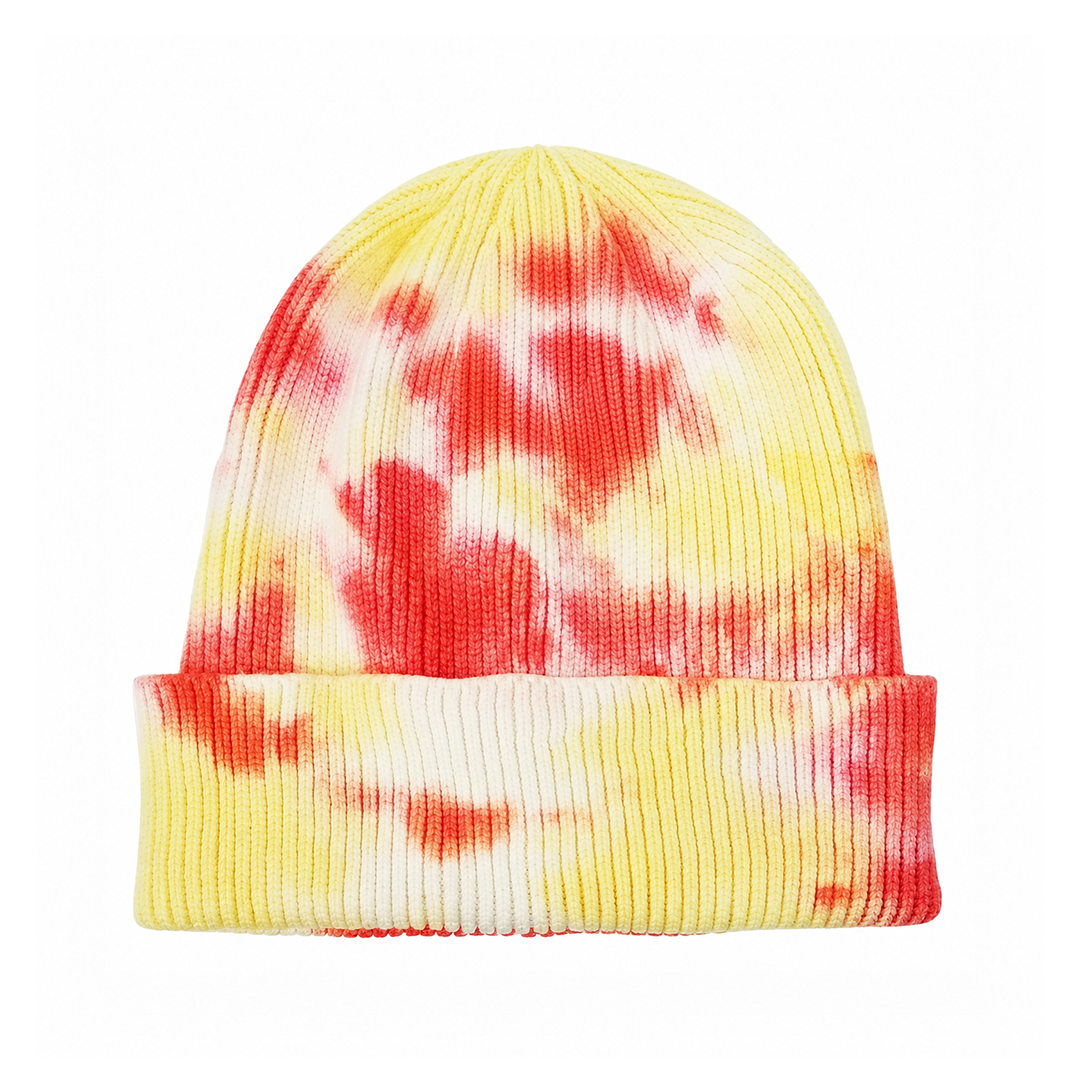
A toboggan and a beanie are the same thing: a close-fitting knit hat worn for warmth. Toboggan is the regional term used across the American South and parts of Appalachia. Elsewhere in the United States it is a beanie, and in Canada it is a toque. No structural or manufacturing difference exists between them.
Where the Word Came From
The strange part is that a toboggan is also a sled, and the sled came first. The word traces back through Canadian French to a Míkmaq term for a hand-drawn sledge. A "toboggan cap" was what you wore to go tobogganing, and over the decades the second word fell away until the hat kept the name on its own.
Beanie has a murkier origin, most likely from "bean" as period slang for head. It originally described the brimless button-topped skullcap worn by university freshmen and delivery boys in the early twentieth century, and only later migrated to cover any close-fitting knit hat. Toque came into English from French, where it described a range of brimless caps, and settled in Canada as the standard word.
None of this history changes what you order. It does explain why the terminology feels inconsistent when you search for it. You are looking at three separate word histories that converged on one product.
What Actually Differs: The Cuff
The distinction worth knowing is not toboggan versus beanie. It is cuffed versus uncuffed, because that is what changes how the hat sits, how warm it is, and how well it takes decoration.

| Style | How it wears | Decoration surface | Best for |
|---|---|---|---|
| Cuffed | Folded band at the brow, snug and traditional | Best — double layer of knit is stable under the needle | Crew hats, retail merchandise, anything with a logo |
| Uncuffed | Sits closer to the head, slightly longer crown | Workable single layer; keep designs simple | Modern, minimal look |
| Slouch | Extra length pools at the back | Hardest — the fabric moves as it is worn | Lifestyle brands, small tight logos only |
| Pom | Cuffed with a pom on the crown | Same as cuffed, with a decorative focal point | Winter retail, holiday runs, teams |
| Lined | Cuffed or uncuffed with a fleece band | Excellent — the lining stabilises the knit further | Cold conditions, outdoor crews |
Cuff construction matters more to the finished result than the regional name.
In short: cuffed beanies take embroidery best, because the folded cuff gives the needle two layers of stable knit to work into.
Why Knit Behaves Differently
Knit is not woven fabric, and that single fact drives every decoration decision. Woven twill on a cap front holds its dimensions under a needle. Knit stretches in every direction, which means a design that sits perfectly on a structured cap can distort noticeably on a beanie.
Two rules follow. Keep the stitch count moderate, because a dense fill pulls the surrounding knit inward and puckers it. Favor designs that read at a glance, because the surface curves away from the viewer on both sides, a wide logo loses its ends.
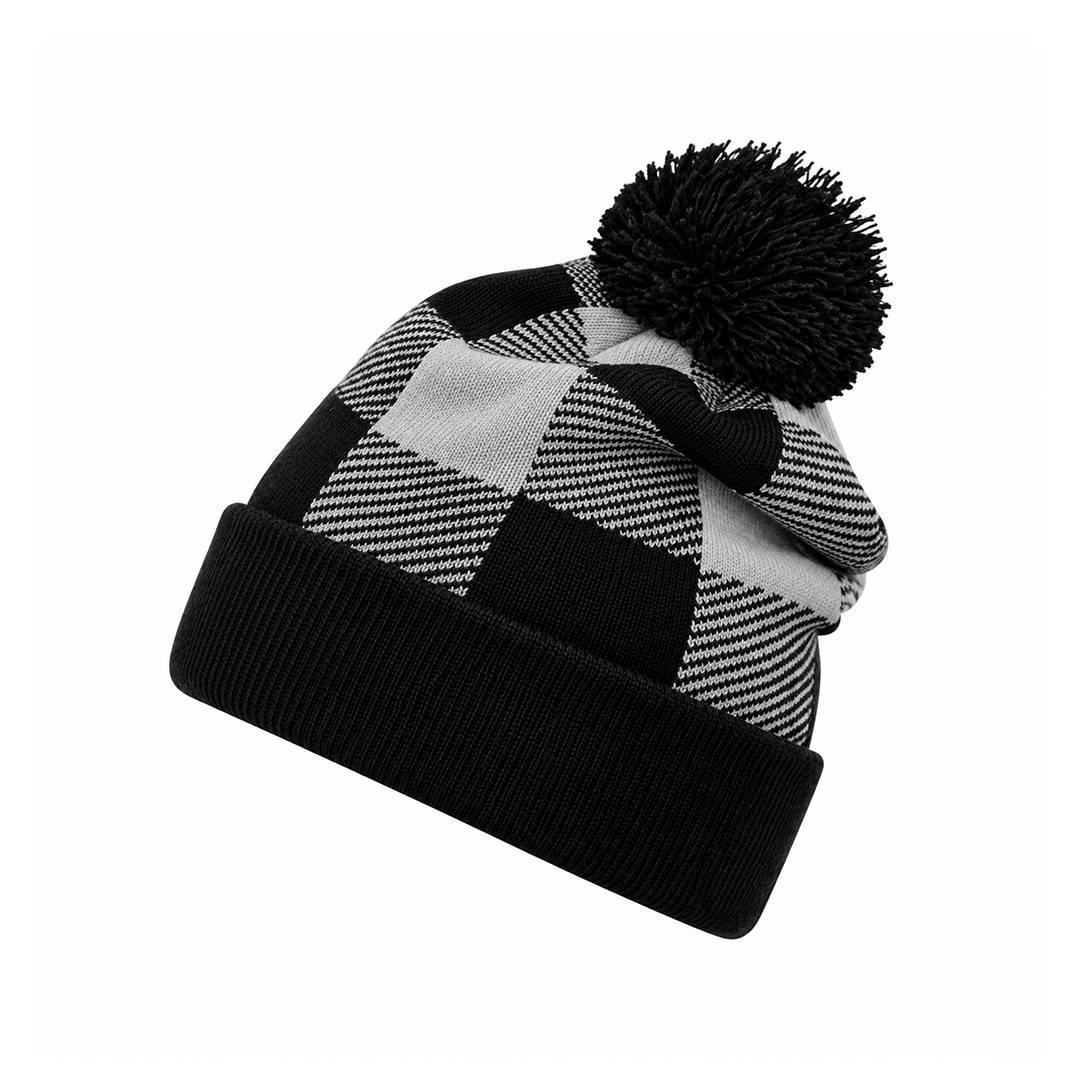
The cuff is the reliable place to put a logo. It is doubled, it is comparatively flat, and it sits at eye level where people look. A crown-placement logo works on uncuffed styles but ends up at an angle nobody quite sees straight on.
Acrylic knit holds embroidery more predictably than a loose wool blend, because the yarn is more uniform. If a design has any fine detail in it, the yarn choice matters as much as the stitch file.
Who Orders Which
Cuffed beanies dominate crew and uniform work, because they are the traditional shape and they carry a logo cleanly at the brow. Outdoor trades, marine businesses, and construction crews order them almost exclusively.
Slouch and uncuffed styles skew toward retail. Breweries, coffee roasters, and apparel brands sell them off the wall alongside dad hats, and the buyer is choosing on aesthetics rather than function.
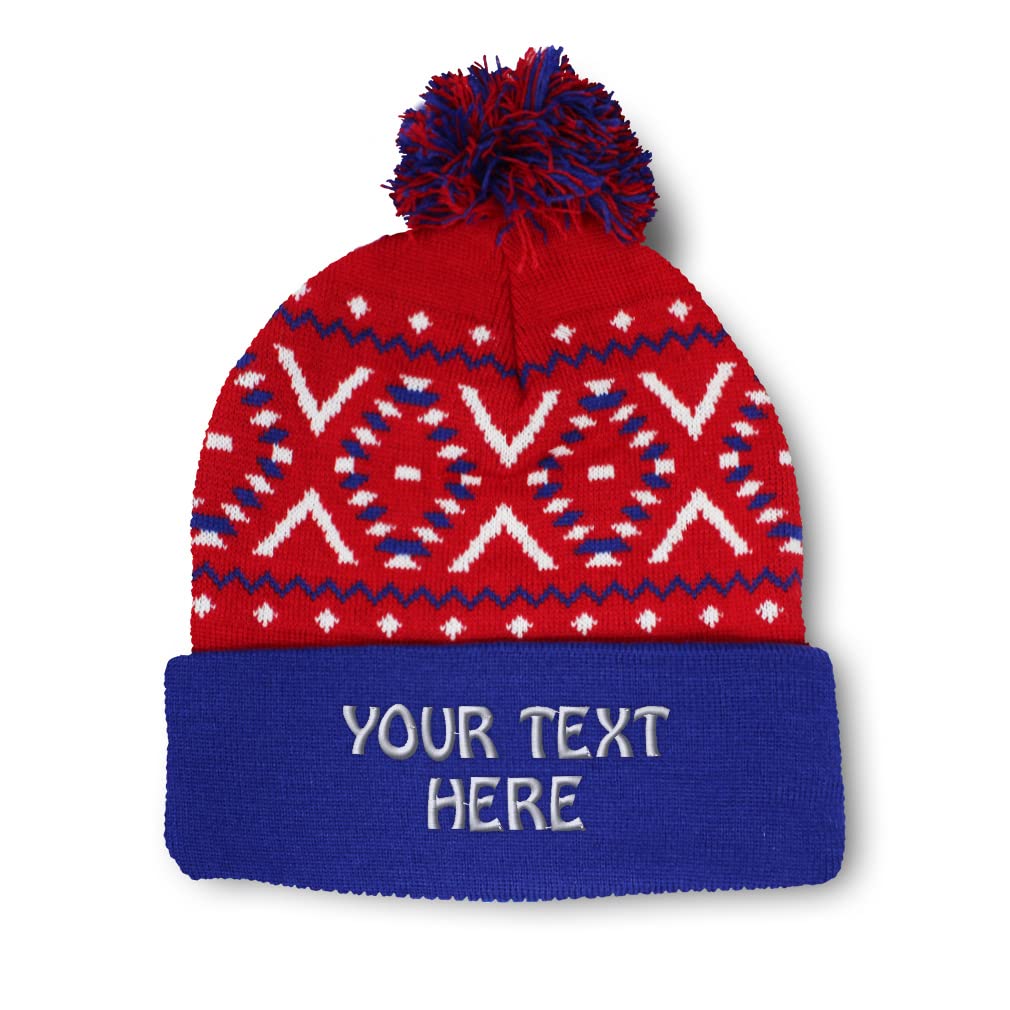
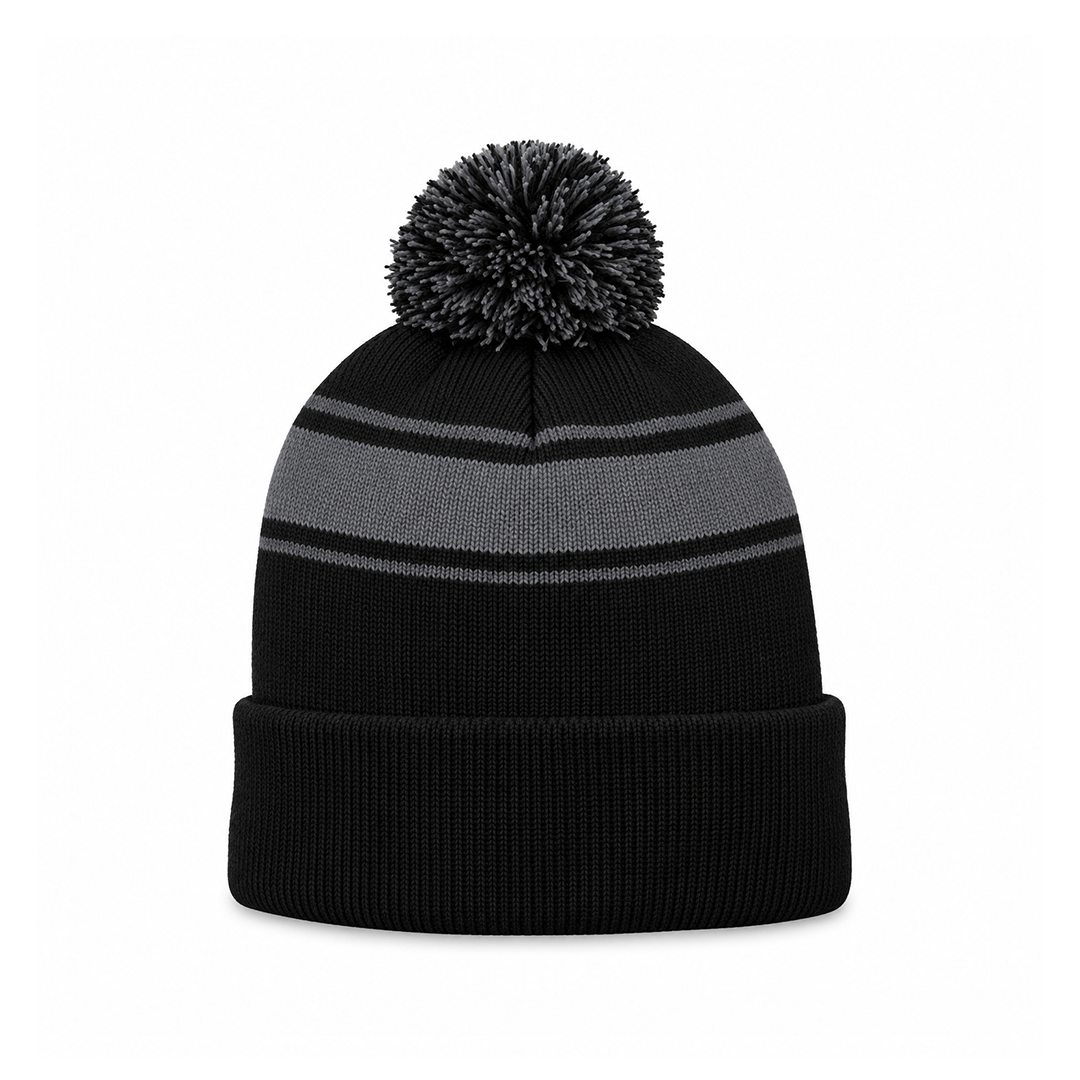
Pom beanies are seasonal and event-driven. Holiday runs, winter markets, ski-town merchandise. They also work well for teams, because the pom gives a second color opportunity without touching the logo.
If you are ordering beanies for a mixed group and do not know preferences, cuffed is the safe default. It is the most universally worn shape and the most forgiving to decorate.
Beanies Alongside Caps
Most businesses that order custom hats eventually want a cold-weather option, and the sensible approach is to run them as one program rather than two. The same digitized logo file can be adjusted for knit rather than recreated from scratch, which keeps the mark consistent across both.
The thing to watch is color. Thread that reads correctly against a woven twill panel can look different against knit, because the surface texture changes how light hits it. Reviewing both on the same proof avoids a mismatch that only becomes obvious when the two hats sit side by side.
Weight and When to Use It
Beanies come in many knit weights and the difference matters more than the style name. A fine-gauge acrylic looks like an accessory and gets worn year-round in the evenings. A heavy ribbed wool reads as equipment and comes out for a handful of days.
Lined beanies add a fleece band at the brow, which is warmer and also stabilises the knit under a needle. For outdoor crews working through a cold snap that lining is worth having; for a retail run in Florida it is usually more hat than anyone needs.
Which Word Should You Use?
Whichever one your customers use. If you sell in Tennessee, the Carolinas, or Kentucky, toboggan will read as natural and beanie will feel slightly imported. In the Northeast, the Midwest, or on the West Coast, the reverse is true. In Florida the two coexist, because so much of the population arrived from somewhere else.
Neither is wrong and nobody will be confused. If you are writing product copy or naming a collection, using the local term signals that you are local, which is worth more than technical precision on a word that has none.
The plural of toque in Canadian usage is toques, and the spelling "tuque" is also standard there. Both are pronounced the same way. American English has largely settled on beanie regardless of spelling debates elsewhere.
Getting Custom Beanies Right the First Time
Beanies are simpler to order than caps because there are fewer variables, but the two that exist matter. Pick cuffed unless you have a reason not to, and keep the design within what knit will hold.
Speedy Pros Hats sends a free digital proof before anything is stitched, so you can see placement and thread colors against the actual yarn color. Artwork setup is free on orders of 12 or more, and there is no minimum on any order.
More recent guides: what is a slouchy beanie, how to measure beanie size.

Frequently Asked Questions
Is a toboggan the same as a beanie?
Yes. They are the same knit hat. Toboggan is the regional term common across the American South, and beanie is the more widespread national term.
Why do Southerners call beanies toboggans?
The hat took its name from the sled. A toboggan cap was what you wore sledding, the second word dropped away over time, and the shortened form stuck regionally.
What is a toque?
The Canadian term for the same hat, pronounced "tuke." It is the standard word in Canada in the way beanie is standard across most of the United States.
Which beanie style is best for embroidery?
Cuffed. The folded cuff gives a stable double layer of knit, which holds stitching cleanly and places the logo at eye level.
Can you put a logo on a slouch beanie?
Yes, but keep it small and simple. The extra fabric moves as the hat is worn, so a large or dense design will distort.
Do beanies come in different sizes?
Most are one size, because knit stretches to fit a wide range. Lined and structured styles occasionally come sized, and youth sizes are available separately.
Related Reading
Speedy Pros Hats decorates beanies to order with no minimum. Browse custom beanies, custom hat
Shop the range: custom beanies.
Speedy Pros also makes a full range of custom beanies — shop the Port & Company CP90 Cuffed Knit Beanie.
★★★★★ 4.9/5 · 23,000+ reviews · Made in the USA
Related guides: wear a beanie in the rain, what is a ribbed beanie, how to style a beanie, what is a fold over beanie, how to pick a beanie, what is a thermal beanie, and mens beanies.