
Beanie Styles Explained: Cuffed, Slouch, Pom & More
Beanies are one of the few branded items people choose to wear. Speedy Pros Hats, family-owned in the Tampa Bay area since 2009, makes them to order with no minimum.
Knit cap, stocking cap, watch cap, toque, beanie, five names, one family of hats, and a surprising number of decisions hiding inside them. Here is what separates each style and which one carries a logo best.
- One design, many blanks. The same logo runs across styles, so a program can mix without looking mismatched.
- Structure decides the logo. Firmer fronts hold dense embroidery; softer crowns want a smaller mark.
- No minimum. A single cap and a full retail run go through the same process.
Why These Beanie Styles Work So Well
They are largely regional. A knit cap in one place is a stocking cap in another, a wool watch cap in military and workwear circles, a toque across the Canadian border, and a beanie almost everywhere online.
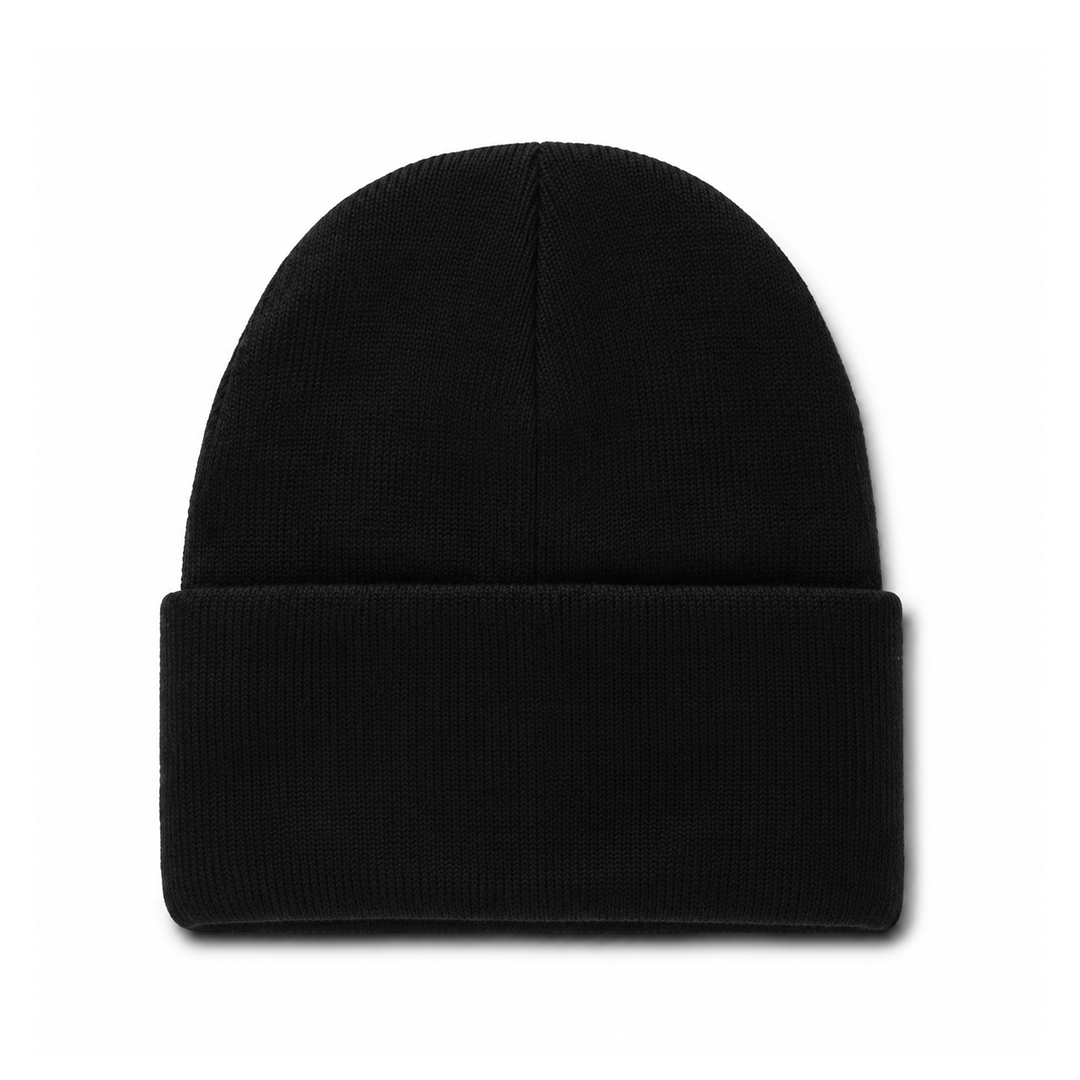
Knit caps and beanie caps describe the same construction: a stretchy knit shell with no brim, worn close to the head. Where real differences start is in the cuff, the length, and the lining.
Cuffed Beanies: The Workhorse
A folded band around the base, and the most-ordered style we decorate. That fold matters for two reasons: it doubles the fabric over the ears where cold bites, and it creates a flat, stable panel at eye level that is the ideal stage for embroidery or a leather patch.
If you are ordering one beanie style for a company or a team, this is it. It fits nearly everyone, it reads classic rather than trendy, and the logo sits exactly where people look.
Slouch, Pom, and Longer Cuts
A slouch beanie is longer, gathering behind the head for a relaxed, fashion-leaning look. Popular with lifestyle brands and younger audiences, though the extra length can pull a logo out of position if it is placed too high.
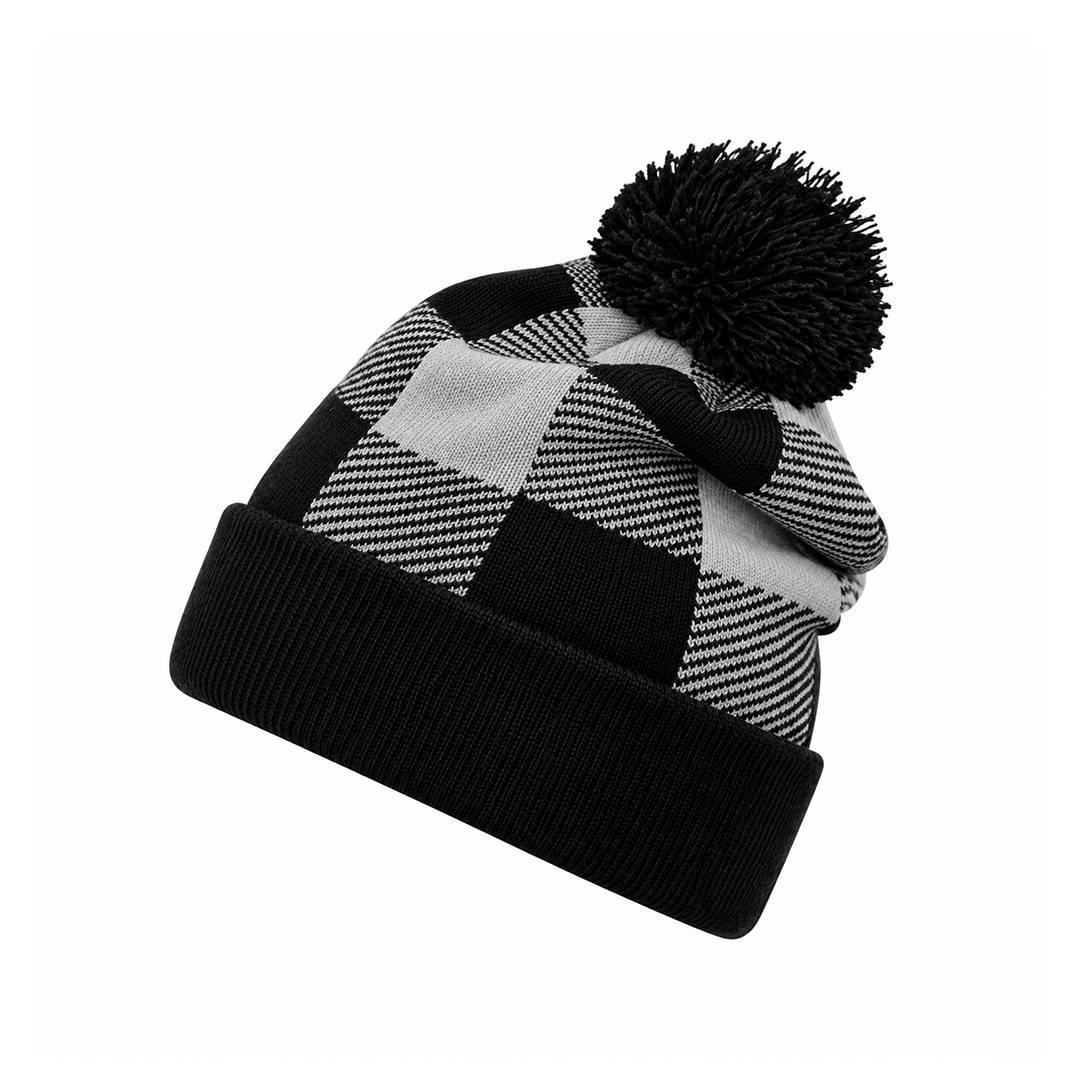
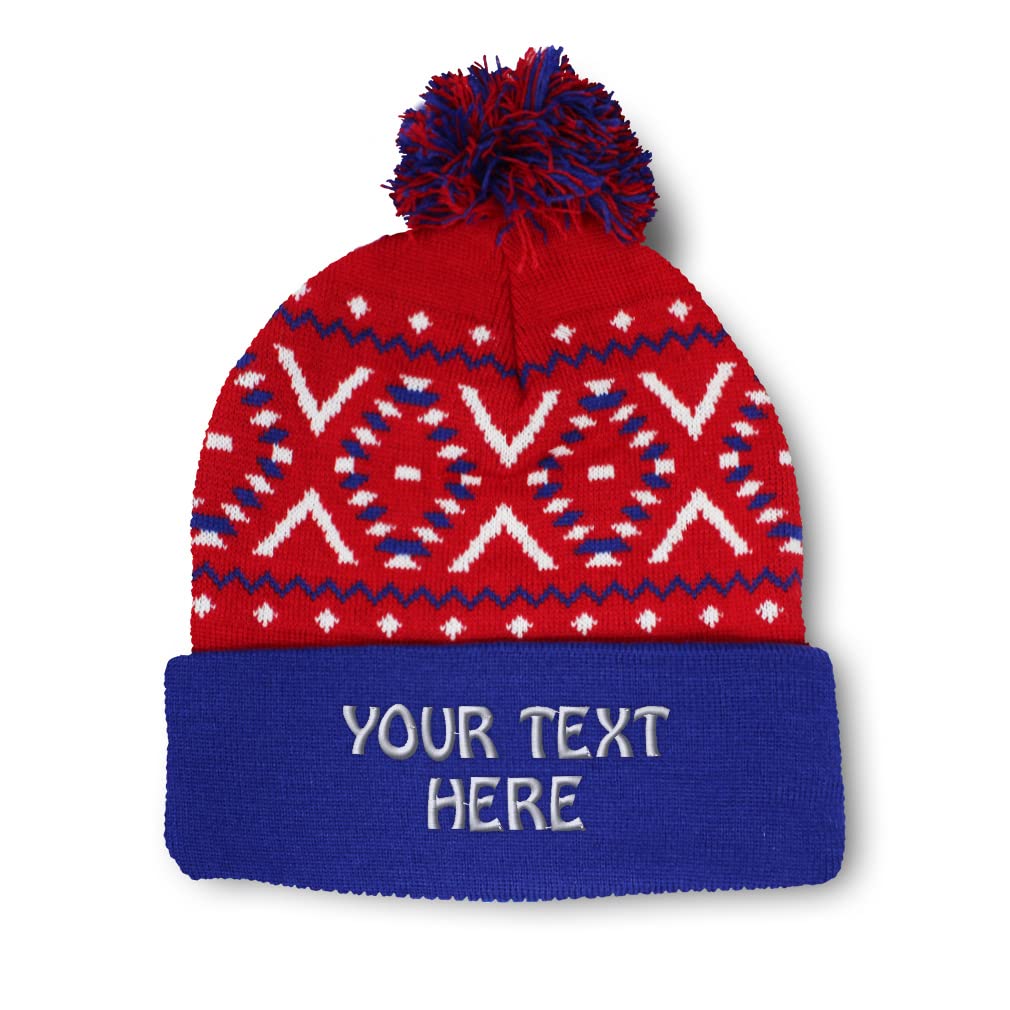
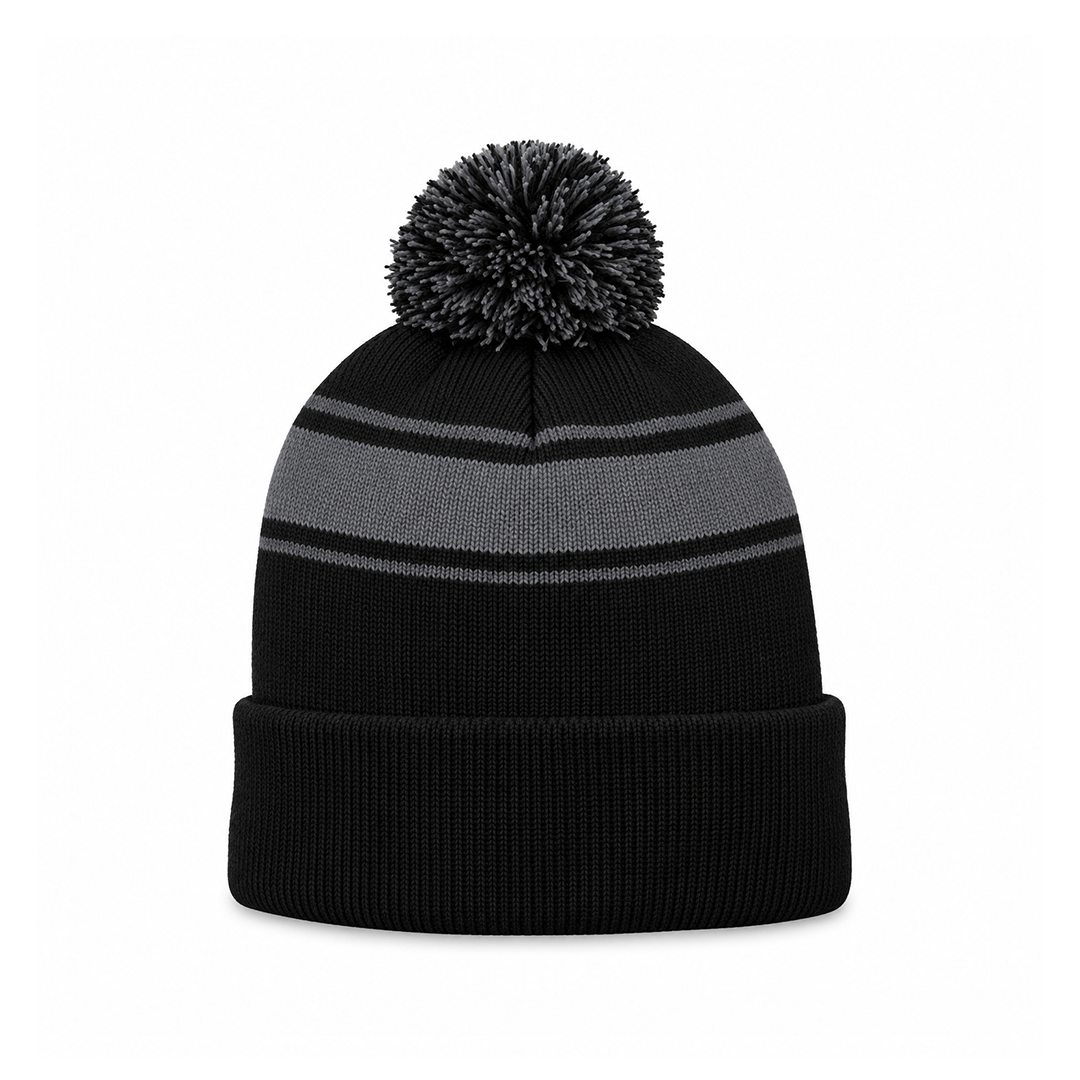
Pom beanies add the ball on top and lean seasonal and playful; they sell exceptionally well as holiday retail merch and family or resort gifts. Both take embroidery, but both reward a slightly smaller, well-placed mark over a large one.
Fleece-Lined and Brimmed Options
A fleece-lined beanie adds a soft inner layer for genuine cold, the right call for outdoor crews working through winter rather than for a fashion drop, and worth the small premium if the wearers are outside all day.
A beanie with a brim adds a short visor for glare, bridging cap and knit territory; it is a favorite among fishing guides and ice-fishing crews. Neither changes how decoration works: the front panel or cuff still carries your logo.

Which Style for Your Order
Company and crew programs go cuffed, every time. Retail and lifestyle merch splits between cuffed and slouch, with pom styles added for the holidays. Outdoor and cold-weather crews want fleece-lined. Anyone squinting into winter sun on the water wants a brim. If you cannot decide, order a small mixed run. There is no minimum, so letting people choose is cheaper than guessing.
Sizing, Fit, and Who Wears What
Beanies are the most size-forgiving headwear there is. Knit stretches, so one adult size covers nearly everyone, which is why group orders are painless compared with fitted caps. Youth sizes exist for school and league programs and are worth ordering separately rather than hoping small heads cope with adult knits.
Fit preference varies more than size. Some people want the cuff sitting just above the eyebrows, others want it higher and looser, and the same beanie handles both because the wearer decides. That flexibility is the practical reason beanies convert so well as gifts and giveaways, and why a single order rarely comes back with sizing complaints.
Decoration Options Beyond Embroidery
Embroidery is the default on knit, and it holds up beautifully. Thread sinks into the weave and survives seasons of washing. But two alternatives are worth knowing. A leather patch on the cuff gives the premium, craft-brand look that sells at retail, and it reads especially well on heather and earth-tone knits.

A woven label sewn into the cuff is the subtler option, closer to what apparel brands use, and it suits merch lines that want the logo present without announcing it. All three run through the same easy proofing and ordering process, and your digital proof shows the placement before anything is made.
How This Style Compares
| Consideration | This style | Structured mesh trucker | Soft dad cap |
|---|---|---|---|
| Best audience | See the guidance above | Crews, events, everyday wear | Boutique, hospitality, lifestyle |
| Crown structure | Varies by model | Firm, holds dense logos | Soft, wants a smaller mark |
| Ventilation | See fabric notes | Mesh back, best in heat | Solid, warmer |
| Sizing for groups | Adjustable in most models | Adjustable, fits nearly all | Adjustable strap |
| Logo capacity | Front panel primary | Large marks and patches | Modest marks only |
| Reads as | Depends on color and finish | Practical and familiar | Casual and considered |
In short: Use the row that matches your job and ignore the rest — the wrong cap for the right reason is still the wrong cap.
- Matching thread to the cap by accident. Tone-on-tone is a deliberate premium look, not a default. Chosen carelessly it makes the logo vanish beyond arm's length.
- Forcing a wide logo onto a seamed front. A center seam runs straight through a wide wordmark on a six-panel cap. Smooth five-panel fronts exist precisely for this.
- Treating brim shape as fixed. Flat and curved brims change the whole character of a cap. If the look matters, specify it rather than assuming.
- Ignoring the crown. Soft low crowns and firm tall crowns want completely different artwork. Dense detail on an unstructured cap puckers; a tiny mark on a tall front looks lost.
What We Tell Customers Who Ask
Keep the logo the same across every style you order. Different blanks with one consistent mark read as a brand; different marks read as clutter.
Let the logo decide the crown, not the other way round. The shape does more of the brand work than most people expect.
For summer programs, mesh backs and moisture-moving fronts are the baseline, not an upgrade. When wind is the problem, a snug knit or a lined structured cap is what stays on. Stretch and performance fabrics need a stabiliser behind the stitch so the fabric does not pull.
Store caps on a shelf or hook rather than crushed in a bag. Both last longer, and there is always a clean one for a customer-facing day.
Order all your colorways in a single run rather than spreading them across the year. Setup happens once, and pricing improves as the total rises.
Given one choice, we would order this style structured, in a color your people already wear, with a simplified mark. It suits the widest range of heads, hides wear, photographs well, and reads as deliberate rather than default. Treat that as the control and judge every future option against it.
Most sites selling custom headwear have never stitched the blank they are listing. The shop has been family-owned and Brandon based since 2009, so the advice comes from people who run the machines.
It shows up as a remake guarantee, no minimum, and a lot of repeat business.
The hat style guide, logo placement guide, choosing logo colors.
Why Order Winter Headwear From Speedy Pros Hats
We are a family shop in the Tampa Bay area, embroidering since 2009, rated 4.9 out of 5 across more than 23,000 reviews. Genuine knit blanks decorated in the USA, free artwork setup on orders of 12+, a free digital proof before anything is stitched, no minimum, and a remake guarantee.
Browse the beanie collection or get custom hats with logo embroidery through the quick order page.
More recent guides: what is a slouchy beanie.

Frequently Asked Questions
Can you put a leather patch on a beanie?
Yes. A cuff patch is one of the best-selling looks in knit headwear, especially on heather and earth-tone beanies. Woven labels are the subtler alternative.
What size beanie should I order for a group?
One adult size covers nearly everyone, knit stretches far more than woven caps. Order youth sizes separately for school and league programs.
What is the difference between a beanie and a knit cap?
Nothing structural, knit cap, stocking cap, wool watch cap, toque, and beanie all describe the same brimless knit style. The names are regional; the construction is the same.
Which beanie style is best for a logo?
Cuffed. The fold creates a flat, stable panel right at eye level, which is the best stage for embroidery or a patch. Slouch and pom styles work too, with a slightly smaller mark.
Are fleece-lined beanies worth it?
For outdoor crews working through real cold, yes. The inner layer makes a genuine difference over a single-layer knit. For retail or fashion use, standard knit beanies are usually the better value.
What are beanies with brims called?
Usually a brimmed beanie or visor beanie, a knit cap with a short brim for glare. Fishing guides and cold-weather outdoor workers order them most.
Do you make knit caps and stocking caps too?
Same product, different name. Knit caps, knit beanies, and stocking caps all describe what is in our beanie lineup, and all take your embroidered logo or patch.
Keep the logo working through winter.
Shop the range: custom beanies.
Speedy Pros also makes a full range of custom beanies — shop the Port & Company CP90 Cuffed Knit Beanie.
★★★★★ 4.9/5 · 23,000+ reviews · Made in the USA
Free digital proof, no minimums, made in the USA.
Related guides: pom beanie vs cuffed beanie, custom pom beanies guide, cuffed vs uncuffed beanie, beanie vs cuffed beanie, tie dye beanies, christmas beanies, decky beanies, purple beanies, rasta beanies, and burgundy beanies.